ol > li {
position: relative;
padding-left: 25px;
margin-bottom: 10px;
counter-increment: item;
}
ol > li::before {
content: counter(item) “. “;
position: absolute;
left: 0;
}
ul li::before {
content: “”;
position: absolute;
left: 0;
top: 8px;
width: 6px;
height: 6px;
background: #000;
border-radius: 50%;
}
.toc-container {
border: 1px solid #e5e5e5;
padding: 20px;
border-radius: 12px;
background: #fafafa;
margin: 20px 0;
}
.blog_content_con div {
margin-bottom: 5px !important;
}
.blog_content_con p {
margin: 0 0 6px 0 !important;
}
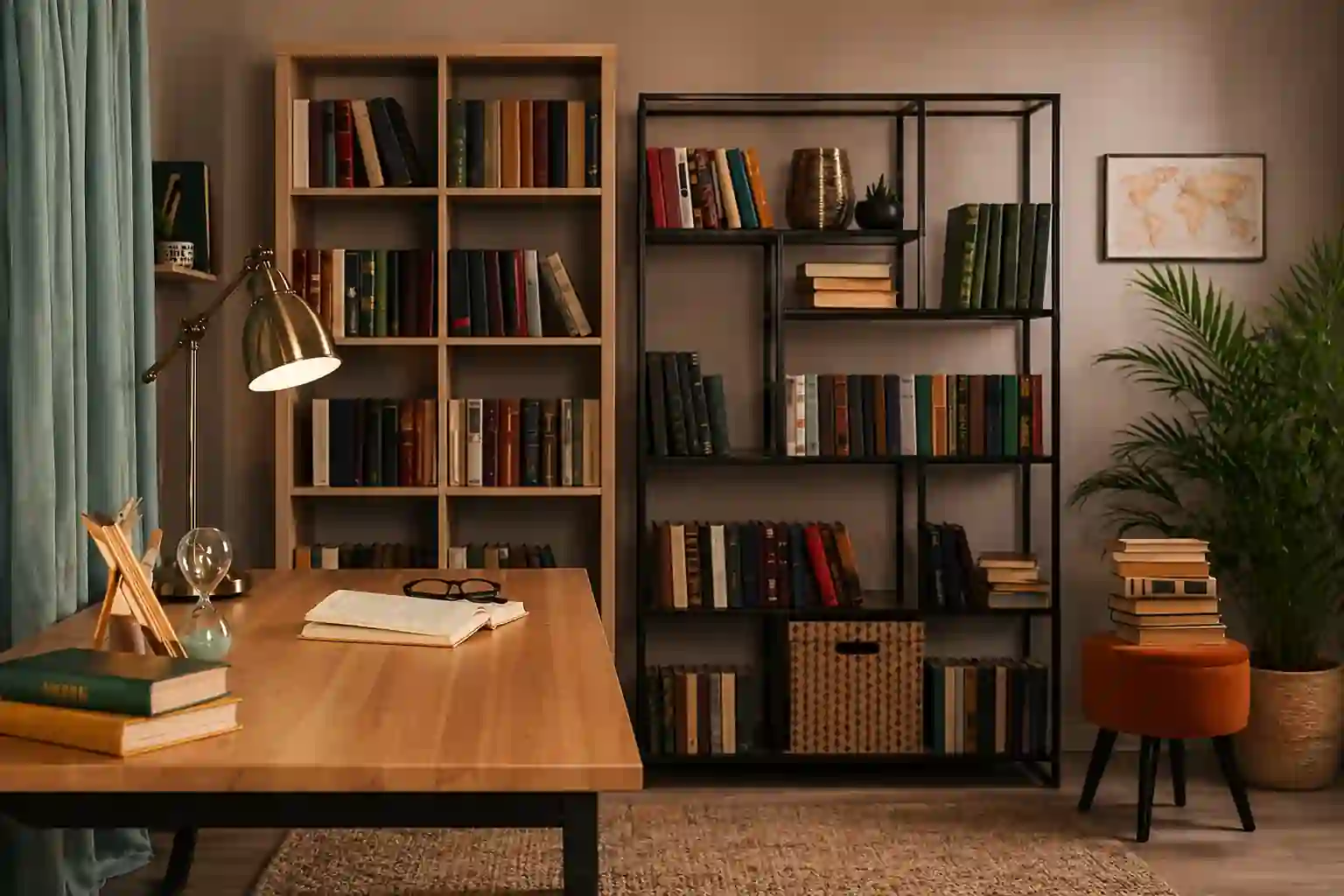
Books can quickly take over a home without a proper system, making it essential to design a functional and intentional personal library space. Use home library design ideas to make the most of available areas, such as corners, walls, and corridors, while prioritising efficient storage solutions. Comfort, lighting, and styling play a key role in making the space usable and inviting. Thoughtful planning, including dust management and future growth, ensures a practical and long-lasting home library.
Books have a way of taking over a home. It starts with a shelf, then a corner, and before you know it, there are stacks on bedside tables, window ledges, even that chair no one is allowed to sit on anymore.
If that sounds familiar, you don’t need more storage. You need a system, and more importantly, a space that actually celebrates your collection instead of hiding it.
This is where smart home library design ideas come in. A personal library is not just about keeping books in place. It changes how you use your home. It gives you a pause point; a corner that feels slower, calmer, and a little more intentional in the middle of everything else.
What are Some Smart Home Library Design Ideas for a Personal Library?
Most urban homes today, especially apartments in cities like Bangalore and Mumbai, are not exactly generous with space. You are working with compact layouts, multi-use rooms, and very real storage limitations. Home library design ideas should consider these constraints when creating a personal library.
-
Start With Where Your Books Already Live
Before you plan anything, look at where your books currently pile up.
• A stack near the bed, you keep saying you’ll organise
• Cookbooks drifting into the dining area
• Study materials are slowly taking over the living room shelf
This tells you how you naturally use your books. Your house’s interior design ideas should accommodate your preexisting patterns rather than forcing a formal library room into your home. If you have a spare room, great. That can become a dedicated home library design. But most homes don’t. And that’s completely fine.
You can build a library into:
• A living room feature wall
• A bedroom corner
• A hallway that usually goes unused
• Even a passage between rooms
For example, in many Bangalore apartments, the long corridor is often dead space. Smart interior designers in Bangalore will use this space to create a floor-to-ceiling bookshelf, giving it a new purpose while maximising the use of free space.
-
Get Storage Right Before Anything Else
Most people focus on aesthetics first. Storage should come first, always. If you’re wondering how to make a library at home, start with this question: how many books do you actually have, and how fast is that number growing?
Because your storage should not just fit your current collection. It should handle what’s coming next. Some options that work well in Indian homes:
• Built-in shelves: Clean, seamless, and space-efficient. Perfect for apartments where every inch counts.
• Modular units: Flexible and easier to expand later. Good if your collection keeps growing.
• Floor-to-ceiling bookcases: Ideal for smaller homes. You use vertical space instead of eating into the floor area.
• Closed cabinets at the bottom: Great for dust protection, especially in cities with heavy pollution.
Smart home library shelving also considers depth. Too deep, and books get lost; too shallow, and you waste space. Around 10–12 inches works well for most collections.
-
Make It Comfortable Enough to Actually Use
A library that looks good but is uncomfortable will not be used. Simple as that. Think about how you read. Morning coffee with a book? Late-night reading before bed? Weekend reading sessions that stretch for hours? Use home library design ideas that match that.
A few things that make a big difference:
• A comfortable chair with proper back support
• A small side table for your coffee or tea
• Soft furnishings like cushions or a throw for longer reading time
• Enough legroom so the space doesn’t feel cramped
In smaller Mumbai homes, even a window seat with storage underneath works beautifully. You get natural light during the day and a cosy reading spot without needing extra space.
-
Lighting Is Not Just Functional, It Shapes the Mood
When thinking about home library design ideas, most people underestimate lighting. It can make or break your library. Task lighting is non-negotiable. You need focused light for reading that does not strain your eyes. A wall-mounted reading lamp or an adjustable floor lamp works well.
Then comes ambient lighting. This is what makes the space feel warm and inviting. Warm white lights are usually better than cool tones for reading zones. They feel softer and less harsh. If your library is part of the living room, layered lighting helps. You can keep it subtle during the day and more intimate in the evening.
-
Style It So It Feels Like Part of Your Home
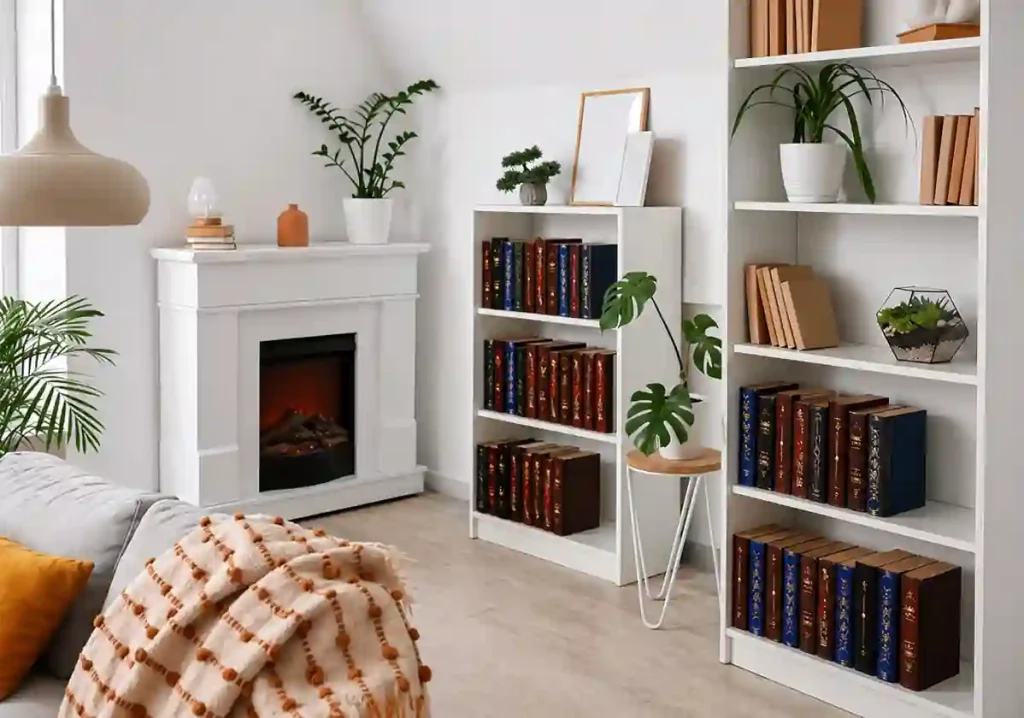
Books alone can look cluttered if not styled properly. Some easy library interior design ideas that work in real homes:
• Mix books with décor. Add small plants, framed photos, or artefacts between sections.
• Organise by genre if you want easy access, or by colour if you prefer a visual impact.
• Leave some breathing space. Not every shelf needs to be packed.
In Indian homes, where festivals and gatherings are common, your library often becomes part of the social space. Home library design ideas that focus on styling can help your library feel integrated rather than a separate entity.
-
Plan for Dust, Maintenance, and Growth
Dust is a real issue, especially in cities. Open shelves look great, but need regular cleaning. If that feels like a chore, mix in closed storage. Glass shutters are a good middle ground. You can see your books, but protect them from dust.
Also, think ahead, as your collection will grow. Leave some empty sections, or design your storage so it can expand. House interior design ideas for a personal library need to consider expansion from the very beginning. The worst thing is building a library that feels full on day one.
How Does Bonito Designs Help You Create Your Personal Library?
Designing a library sounds simple until you try fitting it into an actual home layout with electrical points, wall constraints, and storage conflicts. This is where Bonito Designs steps in with a more grounded approach to house interior design ideas.
Their LifeDesign philosophy focuses on how you actually live. Not just how a space looks on day one, but how it works over time. Whether it is a compact 2BHK in Bangalore or a larger apartment in Mumbai, the designs are tailored to real layouts, not generic plans.
Everything is handled end-to-end. From design to build to quality checks and final handover. With in-house execution and ISO-certified processes, there is better control over materials, finishes, and timelines. So your home library design is not just visually appealing; it’s also functional. It is practical, durable, and built to handle everyday life. Book your consultation today!
PakarPBN
A Private Blog Network (PBN) is a collection of websites that are controlled by a single individual or organization and used primarily to build backlinks to a “money site” in order to influence its ranking in search engines such as Google. The core idea behind a PBN is based on the importance of backlinks in Google’s ranking algorithm. Since Google views backlinks as signals of authority and trust, some website owners attempt to artificially create these signals through a controlled network of sites.
In a typical PBN setup, the owner acquires expired or aged domains that already have existing authority, backlinks, and history. These domains are rebuilt with new content and hosted separately, often using different IP addresses, hosting providers, themes, and ownership details to make them appear unrelated. Within the content published on these sites, links are strategically placed that point to the main website the owner wants to rank higher. By doing this, the owner attempts to pass link equity (also known as “link juice”) from the PBN sites to the target website.
The purpose of a PBN is to give the impression that the target website is naturally earning links from multiple independent sources. If done effectively, this can temporarily improve keyword rankings, increase organic visibility, and drive more traffic from search results.
