body {
font-size: 15px !important;
font-family: ‘NOTOSANSREGULAR’;
}
h2 {
font-family: ‘Heading2Font’;
font-size: 23px;
}
h3 {
font-family: ‘Heading2Font’;
font-size: 20px;
}
h4 {
font-family: ‘Heading2Font’;
font-size: 17px;
}
ol {
counter-reset: item;
margin-left: 20px;
}
ol > li {
position: relative;
padding-left: 25px;
margin-bottom: 10px;
counter-increment: item;
}
ol > li::before {
content: counter(item) “. “;
position: absolute;
left: 0;
}
ul {
list-style: none;
margin-left: 20px;
}
ul li {
position: relative;
padding-left: 18px;
margin-bottom: 8px;
}
ul li::before {
content: “”;
position: absolute;
left: 0;
top: 8px;
width: 6px;
height: 6px;
background: #000;
border-radius: 50%;
}
.toc-container {
border: 1px solid #e5e5e5;
padding: 20px;
border-radius: 12px;
background: #fafafa;
margin: 20px 0;
}
.toc-title {
font-size: 18px;
margin-bottom: 10px;
}
.toc-container a {
text-decoration: none;
color: #000;
}
html {
scroll-behavior: smooth;
}
.blog_content_con div {
margin-bottom: 5px !important;
}
.blog_content_con p {
margin: 0 0 6px 0 !important;
}
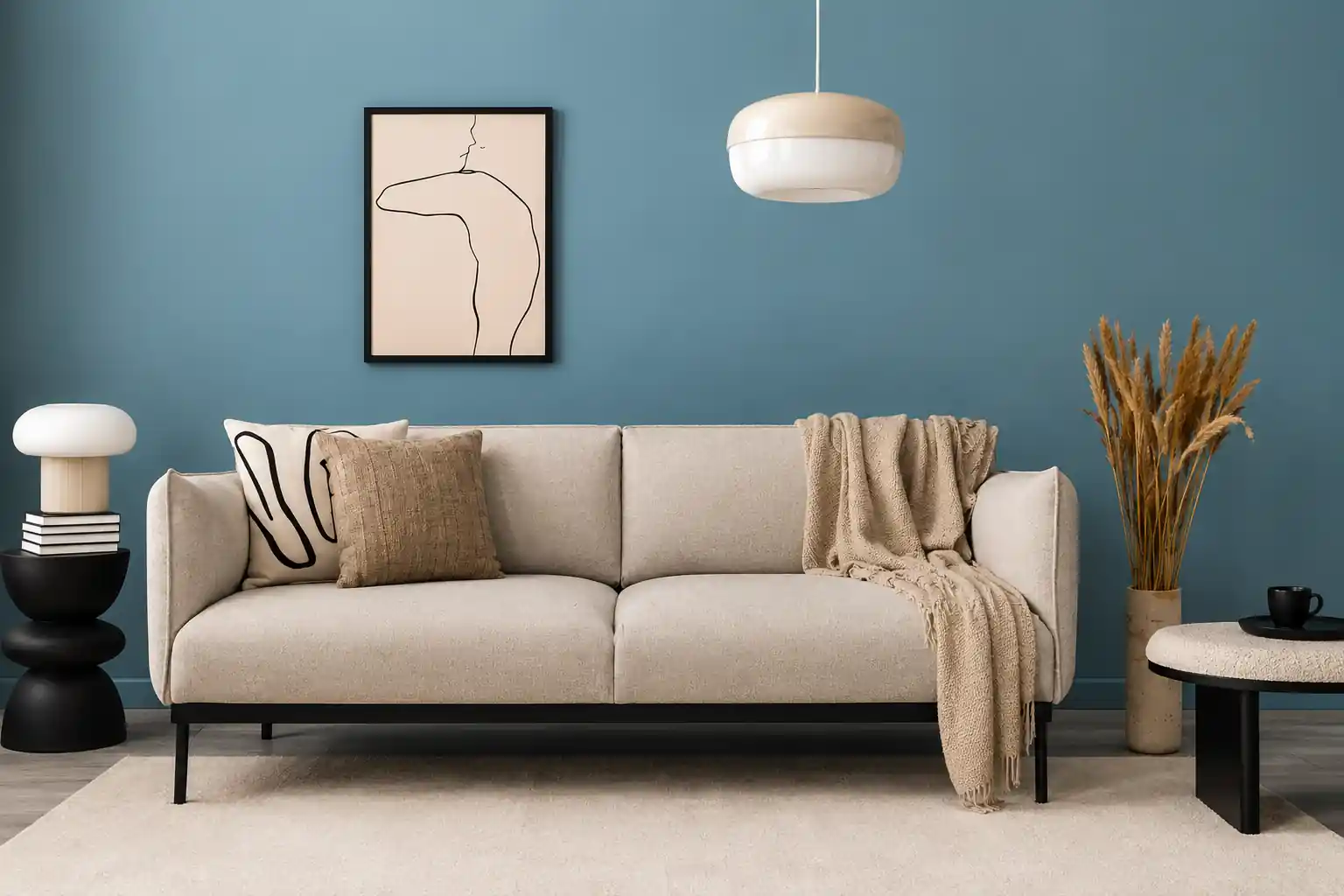
Choosing the right interior wall paint is not just about colour. The paint type and finish affect how the room looks, how well the walls handle moisture or cleaning, how light reflects across the space, and how long the finish lasts. Bedrooms need softer, low-VOC finishes; kitchens and bathrooms need moisture resistance; and children’s rooms and passages benefit from washable paints. A well-designed home always considers paint as part of the larger material palette.
Paint is the finish that covers every surface in your home, and it is the one decision most people make the fastest. A colour is chosen, a brand is picked, and the painter begins their work. However, the type of paint used and the finish it creates are rarely discussed. This is why so many painted rooms end up looking flat or start peeling prematurely.
Alongside colour, choosing the right interior wall paint is also about how it performs in the room where it is applied.
Why Does Interior Wall Paint Type Matter?
Two rooms painted in identical colours but with different finishes will look noticeably different. One might feel warm and settled. The other might feel washed out or overly shiny. Interior wall paint choices affect durability, how light reflects off the surface, how easy the wall is to clean, and how the room feels at different times of day.
Choosing the right interior wall paint is all about understanding your room’s requirements and the pros and cons of each paint option.
What are The Main Types of Paints for Homes?
Here are the five major types of interior wall paint available in the Indian market:
-
Emulsion paint
This is the most widely used indoor wall paint in Indian homes. Water-based, low-odour, and available in a wide range of finishes, it suits most rooms and dries relatively quickly. Premium emulsions can be washed and scrubbed without issue, making them practical for high-traffic areas.
-
Distemper
This is an older, more economical option. Dry distemper is not washable and is not suitable for humid rooms. Acrylic distemper performs better but still falls short of emulsion in durability. It works in low-traffic, dry areas where budget is the primary constraint.
-
Enamel paint
This type of interior wall paint is oil-based and produces a hard, durable surface with a noticeable sheen. It is most commonly used on doors, window frames, and trims rather than full walls. In bathrooms where maximum moisture resistance is needed, enamel is a practical choice.
-
Texture paint
This interior wall paint adds a physical surface dimension rather than a flat finish. It can conceal minor wall imperfections and create visual interest on feature walls. It is harder to repaint and requires more preparation.
-
Low-VOC paints
Low-VOC interior wall paints are growing in popularity in India. Standard solvent-based paints release volatile organic compounds (VOCs) for weeks after application. India’s GRIHA green building rating system has formalised this concern by recommending that interior wall paint meet prescribed VOC limits, with primers kept below 50 g/L. Choosing a low-VOC formulation is a straightforward decision if you want to preserve your home’s indoor air quality.
Types of Wall Paint Finishes and Where Each Works
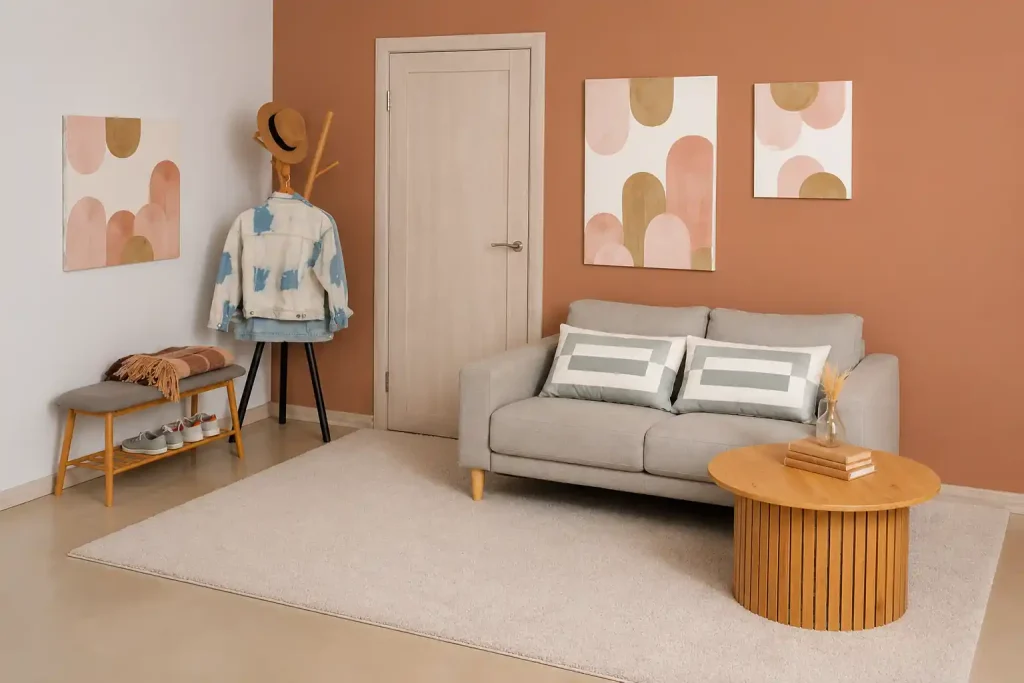
Understanding the types of wall paint finishes is as important as understanding the paint category itself.
-
Matte finish
This finish absorbs light, hides wall imperfections well, and creates a soft, settled look. It is best suited for bedrooms and formal living areas.
-
Eggshell finish
A finish with a slight sheen, eggshell finishes are more washable than matte, making it a good all-purpose finish for living rooms and dining areas.
-
Satin finish
This finish is more reflective than eggshell, easier to clean, and better at resisting moisture. It works well in children’s rooms and living areas with high footfall.
-
Semi-gloss finish
This is a noticeably shiny wall paint that handles moisture and cleaning well. It is suited to kitchens, bathrooms, and utility areas.
-
Gloss finish
This is the most reflective finish available. While it is durable and easy to clean, it shows every wall imperfection and is primarily used on surfaces rather than on full walls.
Room-Wise Recommendations for Interior Wall Paints
Here is the room-wise recommendation for the different interior wall paints available:
-
Bedroom
Opt for matte or low-sheen emulsion in a warm tone. Low-VOC formulations are worth prioritising here given the hours spent in the room.
-
Living room
Choose eggshell or satin emulsion for a balance of appearance and washability. A feature wall in a textured paint or a deeper tone works well here.
-
Kitchen
Go for a moisture-resistant emulsion or semi-gloss finish. The backsplash area may also benefit from enamel or tile rather than paint, regardless of the formulation.
-
Bathroom
For wet areas, you need the best paints for interior walls with moisture-resistant properties and effective waterproofing to prevent rapid deterioration from poor ventilation.
-
Children’s room
Choose a washable satin emulsion, since cleanability matters here more than in any other room. Low-VOC formulations are also worth consideration for their safety benefits.
-
Passages and foyers
Since these areas have higher footfall, it means the walls get touched frequently and need to be wipeable, which is why satin or eggshell finishes are the best options.
Paint Is the First Decision, Not the Last
Interior wall paint interacts with every other surface in the room, and choosing the right paint can be the difference between a beautiful space and one that simply feels off. Bonito Designs approaches indoor wall paint selection as part of the material palette.
Our LifeDesign philosophy is all about building a home that genuinely meets the wants and needs of the family living within it. The paint finish, colour undertone, and VOC specification are all considered in relation to the room’s condition, so that your home feels perfect for living and working in.
If you want your home’s interior wall paint chosen as part of a considered whole, book a consultation with Bonito Designs today.
PakarPBN
A Private Blog Network (PBN) is a collection of websites that are controlled by a single individual or organization and used primarily to build backlinks to a “money site” in order to influence its ranking in search engines such as Google. The core idea behind a PBN is based on the importance of backlinks in Google’s ranking algorithm. Since Google views backlinks as signals of authority and trust, some website owners attempt to artificially create these signals through a controlled network of sites.
In a typical PBN setup, the owner acquires expired or aged domains that already have existing authority, backlinks, and history. These domains are rebuilt with new content and hosted separately, often using different IP addresses, hosting providers, themes, and ownership details to make them appear unrelated. Within the content published on these sites, links are strategically placed that point to the main website the owner wants to rank higher. By doing this, the owner attempts to pass link equity (also known as “link juice”) from the PBN sites to the target website.
The purpose of a PBN is to give the impression that the target website is naturally earning links from multiple independent sources. If done effectively, this can temporarily improve keyword rankings, increase organic visibility, and drive more traffic from search results.
