@font-face {
font-family: ‘Heading2Font’;
src: url(‘ format(‘opentype’);
}
@font-face {
font-family: ‘NOTOSANSREGULAR’;
src: url(‘ format(‘truetype’);
}
body {
font-size: 15px !important;
font-family: ‘NOTOSANSREGULAR’;
line-height: 1.7;
}
h2 {
font-family: ‘Heading2Font’;
font-size: 23px;
line-height: 32px;
margin-bottom: 12px;
}
h3 {
font-family: ‘Heading2Font’;
font-size: 20px;
line-height: 28px;
margin-bottom: 10px;
}
ul {
list-style: disc;
margin-left: 20px;
padding-left: 20px;
}
ul li {
margin-bottom: 8px;
}
.toc-container {
border: 1px solid #e5e5e5;
padding: 20px;
border-radius: 12px;
background: #fafafa;
margin: 20px 0;
}
.toc-title {
font-size: 18px;
margin-bottom: 10px;
}
.toc-container a {
text-decoration: none;
color: #000;
}
html {
scroll-behavior: smooth;
}
.blog_content_con p {
margin: 0 0 12px 0 !important;
}
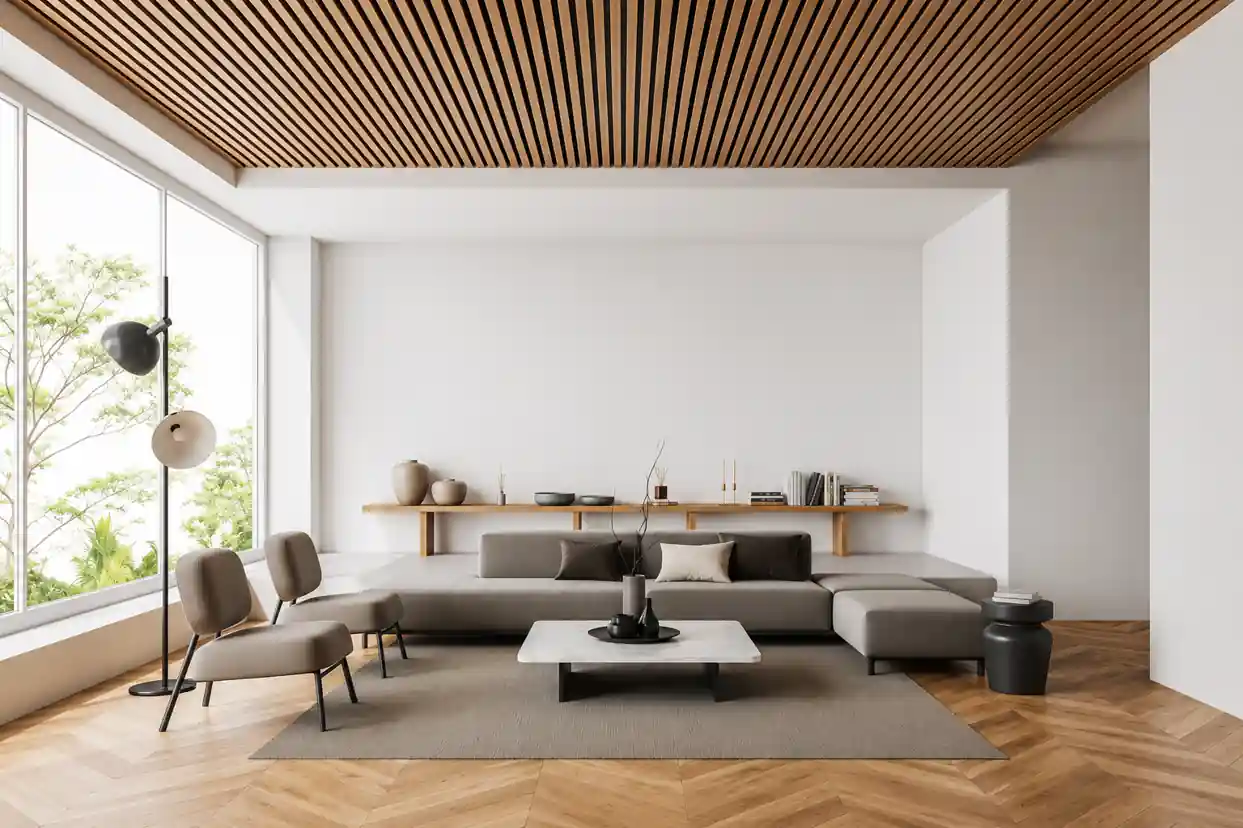
A wooden false ceiling design can turn an overlooked ceiling into a warm, functional and visually refined part of the home. Beyond adding natural texture, it helps integrate lighting, conceal wiring, soften acoustics and create a more considered look across living rooms, bedrooms, dining areas and passages. The right wooden ceiling design should balance ceiling height, room size, humidity, fan placement, lighting and long-term maintenance.
Ceilings are the one surface in a room that people often forget during the designing stage, yet everyone notices them. For instance, a bare concrete ceiling with a single light fitting reads as unfinished, regardless of how well the rest of the room is designed. On the other hand, a wooden false ceiling design changes this completely. It adds warmth, absorbs sound, integrates lighting, and gives the room a sense of being considered all the way up.
What Is a Wooden False Ceiling Design?
A wooden false ceiling design is a secondary ceiling layer installed below the structural slab, using timber, engineered wood, or wood-effect materials. The gap between the two levels is used to conceal wiring, ducting, and lighting infrastructure, while the surface itself becomes a visible design element.
Unlike Plaster of Paris (PoP) or gypsum ceilings, a wooden ceiling design introduces natural texture and warmth that no paint finish can replicate. It changes the acoustic quality of a room, softens the light, and makes the space feel more inviting.
Why Choose a Wooden False Ceiling for Indian Homes?
A few reasons this works particularly well in Indian residential contexts:
-
Warmth in Air-Conditioned Rooms
Homes in Bangalore that run heating during winter months or heavily air-conditioned apartments in Mumbai benefit from wood’s natural insulating quality.
-
Sound Absorption
Wood dampens echo, which matters in open-plan homes where hard floors and bare walls already create significant reverberation.
-
Lighting Integration
A wooden false ceiling design creates natural opportunities for cove lighting, recessed fittings, and pendant drops that would look arbitrary on a flat slab ceiling.
-
Visual Height Control
Counterintuitively, a well-designed false ceiling can make a room feel taller by drawing the eye across a defined, finished surface rather than upward to a raw slab.
Best Wooden False Ceiling Design Ideas for Every Room
If you want to add some character to your home while keeping it compatible with your home’s needs, try out these six wooden false ceiling designs:
-
Wooden rafters or exposed beam design
This wooden false ceiling design features beams running across the ceiling in a single direction. It works best in living rooms with ceiling heights above 10 feet. In older Mumbai buildings with higher slabs, this design has a genuine presence without the cost of a full ceiling installation.
-
Slatted wooden ceiling
This design includes parallel timber strips with visible gaps between them, usually with a dark recess or a backlit panel behind them. It is one of the more popular modern wooden false ceiling designs right now, particularly in bedrooms and dining areas.
-
Panelled wooden ceiling
Flat timber panels covering the full ceiling surface in a grid or linear pattern. This design creates a clean, architectural look that suits modern wooden ceiling design aesthetics in living rooms. It works well in rooms where the ceiling can afford to lose 8 to 12 inches.
-
Tray ceiling with wooden accents
It includes a recessed central section with a timber border framing it. The inner tray is typically finished in a contrasting colour or material, with the wood providing the warmth and definition at the perimeter. This is a good wooden false ceiling design for master bedrooms where you want visual interest without the ceiling feeling claustrophobic.
-
Wood and PoP combination
This is a hybrid approach in which POP handles the structural framing and cove sections, while timber panels or strips serve as accent elements. It’s more budget-friendly than a full wooden false ceiling design and offers greater flexibility in shape and lighting placement.
Wooden False Ceiling Designs for Living Rooms, Bedrooms and Dining Areas
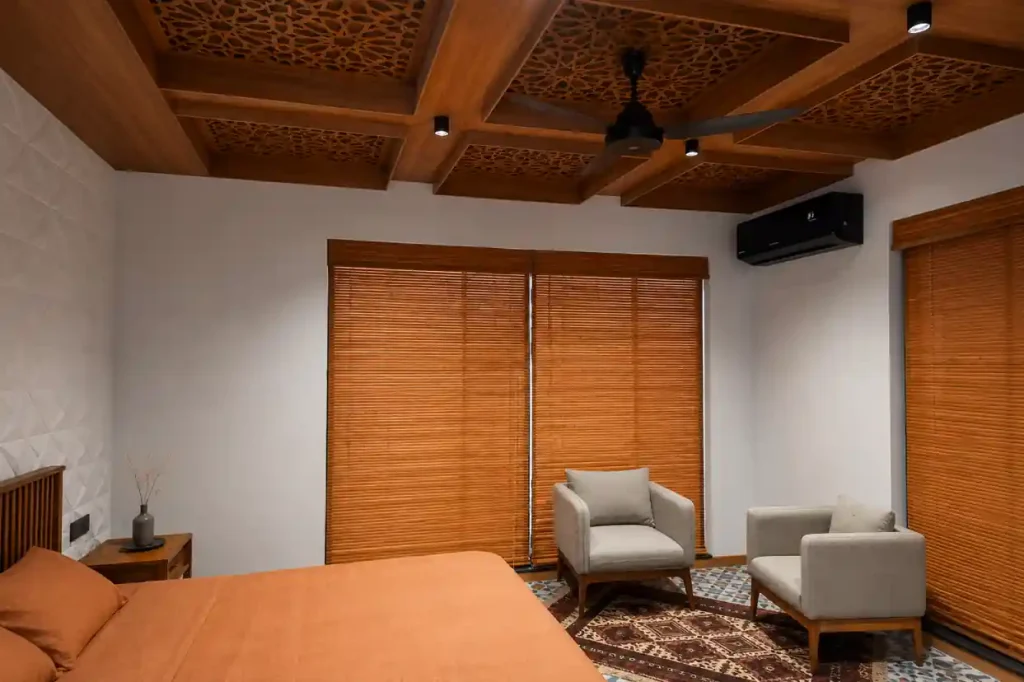
Some room-wise guidelines when experimenting with wooden false ceiling designs include:
-
Living room:
Slatted designs or panelled ceilings work well here. Keep the finish consistent with the flooring tones to avoid the ceiling and floor clashing.
-
Bedroom:
Tray ceilings with timber borders or slatted false ceiling designs with warm cove lighting. Avoid heavy, full-coverage designs that reduce ceiling height in already compact rooms.
-
Dining area:
A defined ceiling element directly above the table, whether a timber-bordered tray or a cluster of pendant drops through a slatted section, anchors the dining zone without requiring walls.
-
Passage and foyer:
A wooden roof ceiling design in a narrow passage adds warmth and makes the transition from entrance to living space feel welcoming.
Lighting Ideas for Wooden False Ceilings
Lighting and ceiling design are two sides of the same coin, and must be considered as a cohesive unit rather than two separate decisions. Here are some guidelines on what works well:
- Install cove lighting along the perimeter or within slatted gaps
- Recessed downlights within panelled sections
- Opt for pendant drops through slatted ceilings over dining tables or reading zones
- Avoid cool white LEDs against timber as the blue tone fights the warmth of the wood and makes both look worse
How to Choose the Right Wooden False Ceiling Design
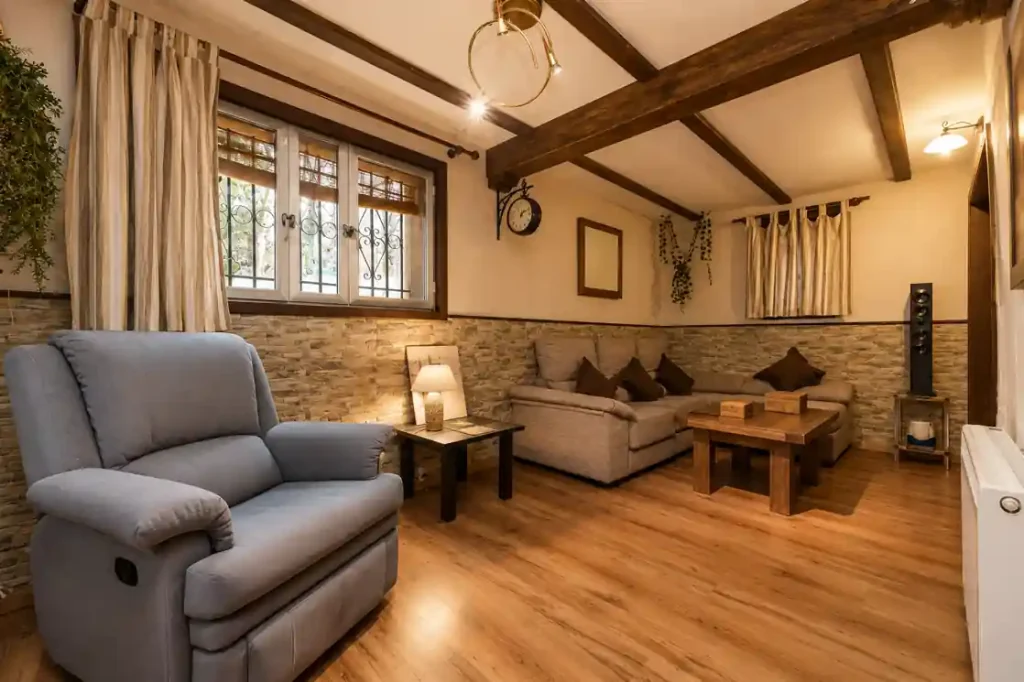
Before deciding on a modern wooden ceiling design, run through these practical filters:
-
Ceiling height:
Below 9 feet, keep the design slim. Slatted or partial coverage works better than full panelling.
-
Room size:
Large rooms can carry heavier, more structured designs. Compact rooms need lighter approaches.
-
Maintenance:
Real wood requires periodic treatment, especially in Mumbai’s humidity. Interior designers in Mumbai usually recommend engineered wood or wood-effect materials due to the city’s climate.
-
Fan placement:
Most Indian bedrooms and living rooms need ceiling fans. Factor the fan position into the ceiling design from the start, not after.
-
Budget:
Full timber coverage costs more than wood-POP hybrid designs. Decide where the visual impact matters most and invest there.
Choose a False Wooden Ceiling Design That Works For You
Bonito Designs plans every wooden false ceiling design alongside the lighting layout, fan positions, AC vents, and material choices suited to your city’s climate. Our Life Design process identifies which rooms your family actually uses most and guides the design to make significant improvements to your lifestyle. With in-house execution and ISO-certified processes, we ensure the design is delivered accurately, with no on-site substitutions.
If you want your ceiling designed as part of the whole, book a consultation with Bonito Designs today.
PakarPBN
A Private Blog Network (PBN) is a collection of websites that are controlled by a single individual or organization and used primarily to build backlinks to a “money site” in order to influence its ranking in search engines such as Google. The core idea behind a PBN is based on the importance of backlinks in Google’s ranking algorithm. Since Google views backlinks as signals of authority and trust, some website owners attempt to artificially create these signals through a controlled network of sites.
In a typical PBN setup, the owner acquires expired or aged domains that already have existing authority, backlinks, and history. These domains are rebuilt with new content and hosted separately, often using different IP addresses, hosting providers, themes, and ownership details to make them appear unrelated. Within the content published on these sites, links are strategically placed that point to the main website the owner wants to rank higher. By doing this, the owner attempts to pass link equity (also known as “link juice”) from the PBN sites to the target website.
The purpose of a PBN is to give the impression that the target website is naturally earning links from multiple independent sources. If done effectively, this can temporarily improve keyword rankings, increase organic visibility, and drive more traffic from search results.