@font-face {
font-family: ‘Heading2Font’;
src: url(‘ format(‘opentype’);
}
@font-face {
font-family: ‘NOTOSANSREGULAR’;
src: url(‘ format(‘truetype’);
}
body {
font-size: 15px !important;
font-family: ‘NOTOSANSREGULAR’;
line-height: 1.7;
}
h2 {
font-family: ‘Heading2Font’;
font-size: 23px;
line-height: 32px;
margin-bottom: 12px;
}
h3 {
font-family: ‘Heading2Font’;
font-size: 20px;
line-height: 28px;
margin-bottom: 10px;
}
ol > li {
position: relative;
padding-left: 25px;
margin-bottom: 10px;
counter-increment: item;
}
ol > li::before {
content: counter(item) “. “;
position: absolute;
left: 0;
}
.toc-container {
border: 1px solid #e5e5e5;
padding: 20px;
border-radius: 12px;
background: #fafafa;
margin: 20px 0;
}
.blog_content_con p {
margin: 0 0 8px 0 !important;
}
.blog_content_con p {
margin: 0 0 8px 0 !important;
}
h2 {
font-size: 22px !important;
line-height: 34px !important;
}
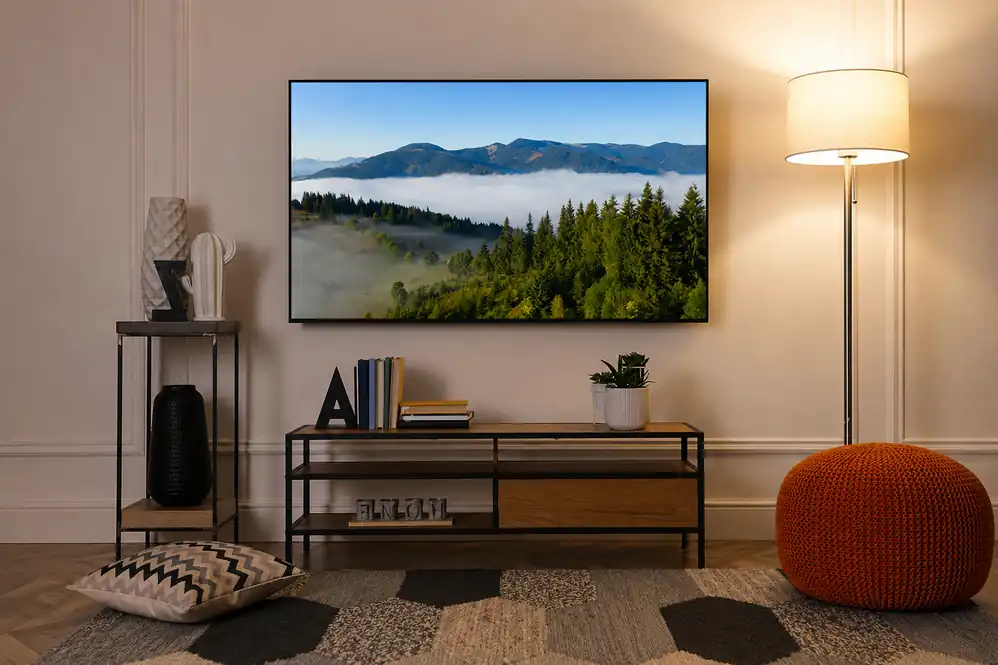
Buying a TV sounds easy until you actually start looking. But choosing between different TV sizes has less to do with trends and more to do with balance. Your seating distance matters, wall space matters, and even the layout of your sofa changes how comfortable the setup feels.
And then there’s the visual side of things. A TV is not just electronics anymore. It becomes part of the interiors. Sometimes the focal point. A well-sized screen can make the entire room feel polished. A badly sized one? Feels awkward every single day.
Why Does TV Size Matter in Home Interiors?
Most homeowners think bigger automatically means better. But that’s not always the case. A huge screen in a compact room can feel exhausting to watch, especially if the sofa is placed too close. On the flip side, very small screens often disappear visually in larger spaces. The room ends up looking incomplete, almost like something is missing from the wall.
That’s why comparing television sizes properly matters before buying anything. The TV should work with the room, not compete with it.
In smaller Mumbai homes, space can be a limited and important commodity. Interior designers in Mumbai recommend standard TV sizes in such homes, as they usually feel more natural and keep the room visually balanced. Larger layouts and open-plan living areas, though, can handle large TV sizes much more comfortably.
People also forget how much a TV affects the overall mood of a space. The size changes proportions. It changes visual weight. Even your wall décor and lighting setup start looking different around it. A proper TV size comparison is not just about screen inches. It is about comfort, layout, and aesthetics all working together.
Why Should You Measure Your Living Room Before Selecting a TV?
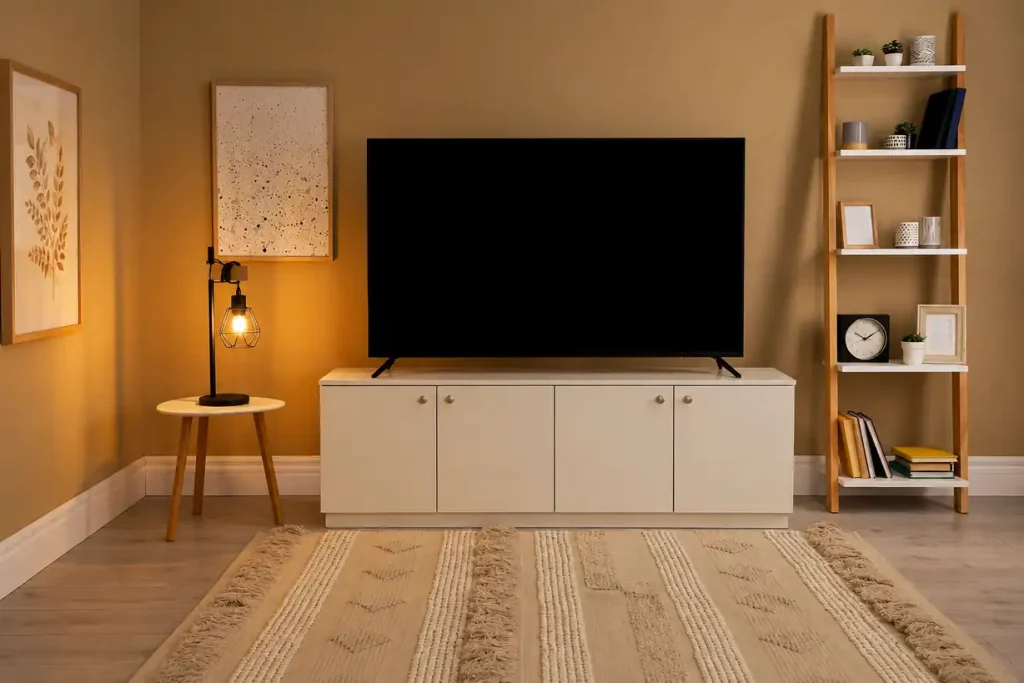
Before checking prices or watching comparison videos online, grab a measuring tape. Start with the obvious things:
- Wall width
- Distance between the TV and sofa
- Height of the room
- Furniture placement
- Window positions
- Natural light during daytime
Modern TV sizes can feel very different in person compared to how they look online. A sleek bezel design can make one screen appear much larger than another, even when both have the same inch size.
You should also pay attention to actual TV dimensions instead of relying only on diagonal screen measurements. A lot of homeowners assume a 55-inch TV means the width is 55 inches. However, the size of TVs is measured diagonally.
That is why checking exact TV dimensions in mm becomes useful, especially if you are planning custom wall panelling or a fitted entertainment unit. Some homeowners also compare TV sizes in cm because it feels easier while discussing layouts with designers or carpenters.
A simple room breakdown usually helps:
How Can You Calculate the Right Screen Size for Your Viewing Distance?
A comfortable TV size and viewing distance ratio make movies feel immersive without forcing your eyes to constantly adjust. When the screen is too large for the space, watching becomes tiring surprisingly fast.
Here’s a practical TV size chart most homeowners can actually use
| Viewing Distance | Recommended TV Size |
|---|---|
| 4 to 6 ft | 32 to 43 inch |
| 6 to 8 ft | 50 to 55 inch |
| 8 to 10 ft | 65 inch |
| 10+ ft | 75 inch and above |
This TV size chart gives a decent starting point before comparing brands or features. You will also come across a LED TV size chart while browsing online stores. Some websites even organise products according to viewing distance now, which honestly makes shopping much easier.
If screen measurements still feel confusing, this quick TV inches size list helps:
- 32-inch TVs suit compact rooms
- 43-inch TVs fit medium spaces nicely
- 55-inch TVs work well in most modern homes
- 65-inch TVs create a more cinematic experience
- 75-inch and above setups feel premium but need space
A lot of buyers also search using a TV inches list when comparing brands side by side.
1. Check Viewing Angles
Ever sat on the side corner of a sofa and noticed the screen suddenly looks dull? That’s the viewing angle issue. Some TVs lose colour accuracy or brightness when viewed from the side, which becomes noticeable in larger seating layouts or open-plan homes.
Different LED TV sizes can perform very differently depending on the display technology being used. If your living room has multiple seating spots, wider viewing angles become important. Natural light looks great in a living room until sunlight starts bouncing directly off the screen every afternoon.
Before finalising placement, check:
- Window direction
- Balcony openings
- Artificial lighting
- Reflection points
Another mistake people constantly make? Mounting the TV too high. It looks stylish for about two days, then your neck starts complaining. The centre of the screen should ideally sit close to eye level while seated. For tighter layouts, small TV sizes usually feel more comfortable because viewers naturally sit closer to the screen.
2. Match the TV Size with Your Wall Unit
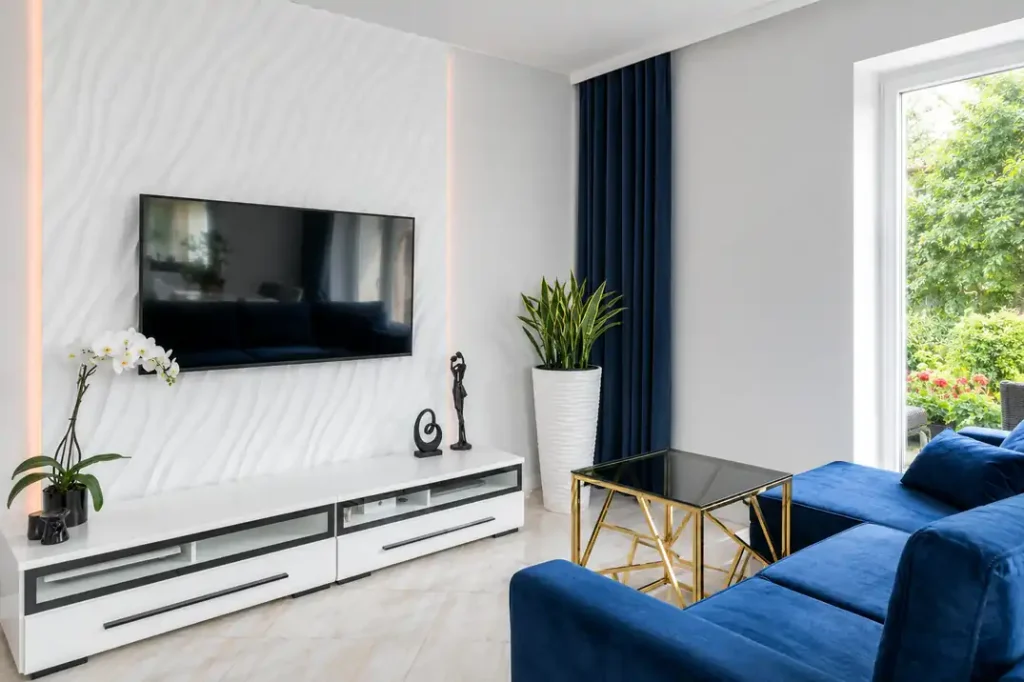
A TV setup should feel visually connected to the room. If the screen looks too big for the console underneath, the whole setup starts feeling off-balance. Similarly, tiny TVs floating on massive feature walls can make the space feel unfinished.
When comparing different sizes, think about the surrounding elements too:
Things to consider:
- Wall panelling
- Storage cabinets
- Floating shelves
- Accent lighting
- Decorative finishes
- Cable management
Many homeowners now design entertainment units around exact TV dimensions so everything aligns properly. This becomes even more important while planning for the biggest TV size options because oversized screens need stronger visual framing.
3. Set a Budget
Setting a realistic budget early helps narrow the options. Also remember, the TV itself is rarely the only expense.
You may also spend on:
- Installation
- Wall mounting
- Sound systems
- Streaming devices
- Storage units
- Lighting upgrades
A lot of homeowners researching TV sizes in india focus only on the screen price and forget the surrounding setup costs. There are good options available across different LED TV sizes today, whether you want a simple apartment setup or a premium entertainment wall.
And honestly, you do not always need the biggest TV size available. A thoughtfully placed 55-inch TV usually feels far better than an oversized screen forced into a compact room.
4. Research TV Features
Not everyone uses a TV the same way. Some families mainly stream movies and shows. Others use the TV for gaming, sports, or casual background viewing during the day.
A proper TV size guide should go beyond dimensions and include usability too. A few things worth checking before buying:
- LED, OLED, or QLED display types
- Smart TV interface
- Refresh rates
- Built-in sound quality
- App compatibility
- Energy efficiency
Larger television sizes usually consume more power, so efficiency becomes important over time. Families building entertainment-focused living rooms often prefer large TV sizes for a more immersive experience, while minimalist homes usually benefit from cleaner, compact setups.
What are Some Common Mistakes to Avoid When Choosing Your TV’s Size?
- Ignoring viewing distance
- Mounting the TV too high
- Choosing aesthetics over comfort
- Forgetting console dimensions
- Buying oversized screens just because they look impressive in stores
Using a proper TV size chart before purchasing helps avoid most of these problems. And no, the biggest screen is not automatically the best one. Balanced setups almost always feel more comfortable in real homes.
Need Help Designing the Perfect TV Unit for Your Home?
Bonito Designs helps homeowners create living rooms that feel functional, visually balanced, and tailored to modern lifestyles. Whether you want a minimalist setup or a full entertainment wall, the right layout can completely change the way your living room looks and feels. And honestly, that’s the real goal here. Book a consultation today!
PakarPBN
A Private Blog Network (PBN) is a collection of websites that are controlled by a single individual or organization and used primarily to build backlinks to a “money site” in order to influence its ranking in search engines such as Google. The core idea behind a PBN is based on the importance of backlinks in Google’s ranking algorithm. Since Google views backlinks as signals of authority and trust, some website owners attempt to artificially create these signals through a controlled network of sites.
In a typical PBN setup, the owner acquires expired or aged domains that already have existing authority, backlinks, and history. These domains are rebuilt with new content and hosted separately, often using different IP addresses, hosting providers, themes, and ownership details to make them appear unrelated. Within the content published on these sites, links are strategically placed that point to the main website the owner wants to rank higher. By doing this, the owner attempts to pass link equity (also known as “link juice”) from the PBN sites to the target website.
The purpose of a PBN is to give the impression that the target website is naturally earning links from multiple independent sources. If done effectively, this can temporarily improve keyword rankings, increase organic visibility, and drive more traffic from search results.
