ol > li {
position: relative;
padding-left: 25px;
margin-bottom: 10px;
counter-increment: item;
}
ol > li::before {
content: counter(item) “. “;
position: absolute;
left: 0;
}
ul li::before {
content: “”;
position: absolute;
left: 0;
top: 8px;
width: 6px;
height: 6px;
background: #000;
border-radius: 50%;
}
.toc-container {
border: 1px solid #e5e5e5;
padding: 20px;
border-radius: 12px;
background: #fafafa;
margin: 20px 0;
}
.blog_content_con div {
margin-bottom: 5px !important;
}
.blog_content_con p {
margin: 0 0 6px 0 !important;
}
There’s a certain mood you walk into when you enter a Moroccan-inspired space. Warm, layered, and slightly dramatic, but in a good way. Moroccan bedroom interiors are slowly gaining popularity, as they break away from flat, minimal spaces and replace them with something richer and more personal.
But here’s the catch: Moroccan design can easily go from stunning to overwhelming if not handled carefully. Especially in homes across Bangalore and Mumbai, where space, light, and climate all play a role in how interiors behave.
What Defines a Moroccan Bedroom Interior?
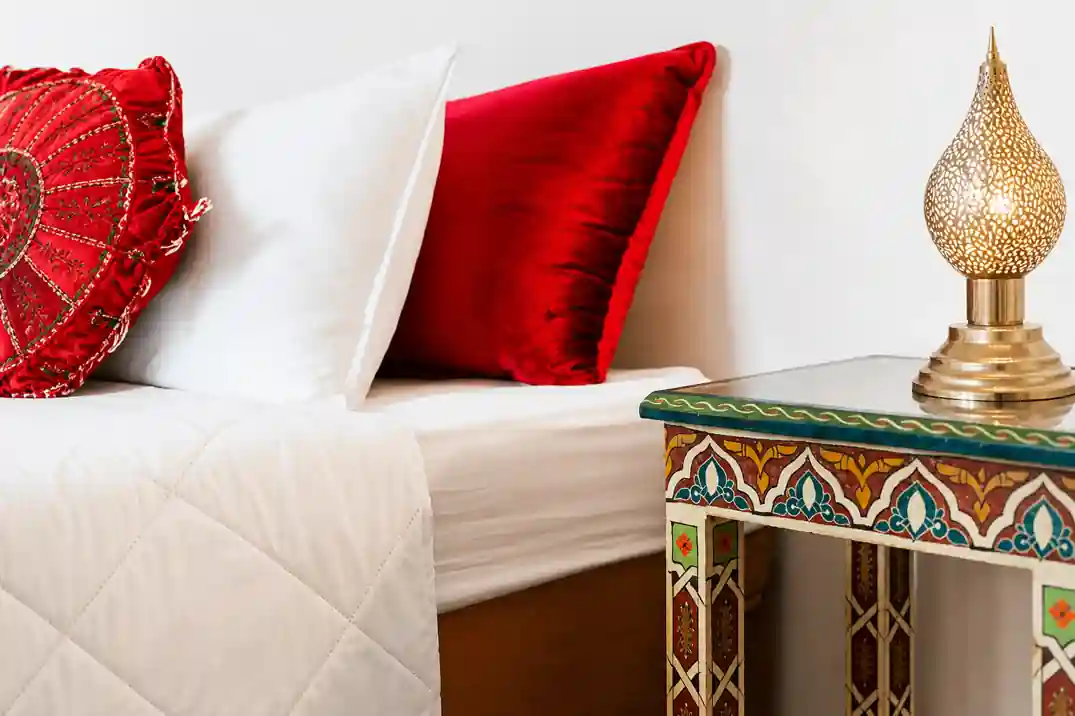
Moroccan design is about layering. Not just visually, but physically. Different materials, textures, and patterns come together to create depth. Think carved wood headboards, arched niches, patterned tiles, and soft textiles everywhere.
In a typical Bangalore apartment, where bedrooms often double as work corners or storage zones, this layering needs to be intentional. You don’t want clutter disguised as design. That’s where smart planning comes in.
Why Does Textures Matter More Than Anything?

If you take one thing away from Moroccan design, let it be this. Texture is doing most of the heavy lifting. Wall finishes, fabrics, furniture surfaces, and even lighting fixtures all contribute to how the room feels.
When done right, wall texture designs for bedroom spaces can instantly set the tone. Instead of plain painted walls, you can explore:
• Lime plaster finishes
• Subtle stucco effects
• Patterned panels that mimic traditional Moroccan motifs
This doesn’t mean going overboard, since one feature wall is often more than enough. Especially in Mumbai apartments where humidity can impact certain finishes, it’s important to choose materials that age well. A bedroom texture design should feel inviting the moment you step in. Not like a showroom; more like a place you actually want to unwind after a long day.
What are Colour Palettes That Actually Work?
Moroccan bedroom interior designs are known for bold colours:
• Deep blues
• Burnt oranges
• Emerald greens
• Rich reds
These colours sound intense, and they can be. Especially in urban Indian homes found in Mumbai and Bangalore, where the visual space is already constrained. In Indian urban homes, a grounded, warm base can work better, such as:
• Beige
• Sand
• Or muted terracotta
You can then layer the colours through textiles and decor.
Jewel tones can work beautifully if you want royal texture paint designs for bedroom walls, provided they are balanced with lighter elements. For example, a deep indigo accent wall paired with neutral bedding and brass accents creates contrast without overwhelming the space. In homes with abundant natural light, darker tones can make the room feel cosy rather than cramped when used strategically.
Why is Lighting Essential for Moroccan Bedroom Interiors?
Lighting in Moroccan bedroom interiors isn’t just about visibility; it’s about atmosphere. Soft, diffused lighting works best. Think lantern-style fixtures, pendant lights with intricate cutwork, and warm LED strips hidden behind panels.
In Mumbai apartments with lower ceilings, lighting can easily overwhelm the space is used improperly. Interior designers in Mumbai use wall-mounted lights or smaller pendants to achieve the same effect without crowding the space. The goal is to create pockets of light rather than a single harsh overhead light. This makes the room feel calmer, especially at night.
How to Create Patterns Without Chaos?

Patterns are a big part of Moroccan interior design bedroom concepts. But mixing too many can quickly turn messy. The trick is to anchor the room with one dominant pattern. This could be on a rug, a wall panel, or even bedding.
In compact Bangalore bedrooms, maintaining balance is essential to avoid visual clutter. Interior designers in Bangalore achieve this balance with smaller, subtler patterns in cushions or curtains. For example, if you’re using geometric tiles or wallpaper, keep the rest of the room relatively calm.
How to Customise Furniture and Layout for Indian Homes?
Bedroom interiors in Indian cities are rarely spacious. You’ve got wardrobes, sometimes a study desk, maybe a dresser squeezed in. And somehow, it all has to coexist. Moroccan design leans toward low seating, carved wood furniture, and upholstered pieces.
• A carved headboard can become the focal point
• A bench at the foot of the bed adds both style and function
• Storage can be integrated into beds or wardrobes with textured shutters
Think about daily routines. Where do you drop your bag when you walk in? Where do chargers pile up? These small habits should guide the layout.
Making It Work for Everyday Life
Design isn’t just about how things look on day one. It’s about how they function six months later. In homes with kids, those beautiful cushions will end up on the floor. In pet-friendly homes, rugs need to be easy to clean. During festivals, you might need extra seating or space for guests.
Moroccan bedroom interiors can handle this if planned right. Use durable fabrics, opt for washable covers, keep circulation space clear, etc. It’s about blending aesthetics with real life.
How Bonito Designs Brings It All Together
This is where execution makes or breaks the idea. At Bonito Designs, the focus isn’t just on creating a visually appealing bedroom interior. It’s about building a space that works for your lifestyle. Their LifeDesign philosophy looks beyond trends. It considers how you live, move, and use your space daily. Especially in cities like Bangalore and Mumbai, where every square foot matters.
With in-house execution, ISO-certified quality, and a structured workflow that moves from design to build to quality checks and final handover, the process stays controlled and consistent. They understand local layouts, the challenges of humidity, the need for smart storage, and how to bring in global styles like Moroccan interior design bedroom concepts without making the space feel impractical.
Book a consultation today if you want a bedroom interior that aligns with your house’s layout and the nuances of your lifestyle!
PakarPBN
A Private Blog Network (PBN) is a collection of websites that are controlled by a single individual or organization and used primarily to build backlinks to a “money site” in order to influence its ranking in search engines such as Google. The core idea behind a PBN is based on the importance of backlinks in Google’s ranking algorithm. Since Google views backlinks as signals of authority and trust, some website owners attempt to artificially create these signals through a controlled network of sites.
In a typical PBN setup, the owner acquires expired or aged domains that already have existing authority, backlinks, and history. These domains are rebuilt with new content and hosted separately, often using different IP addresses, hosting providers, themes, and ownership details to make them appear unrelated. Within the content published on these sites, links are strategically placed that point to the main website the owner wants to rank higher. By doing this, the owner attempts to pass link equity (also known as “link juice”) from the PBN sites to the target website.
The purpose of a PBN is to give the impression that the target website is naturally earning links from multiple independent sources. If done effectively, this can temporarily improve keyword rankings, increase organic visibility, and drive more traffic from search results.